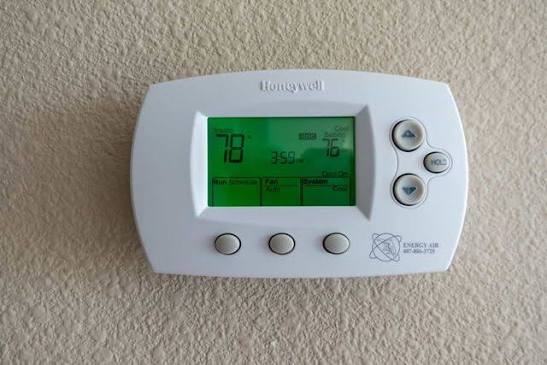
A thermostat is one of the most important control points in a home's heating and cooling system. When its display suddenly goes dark, homeowners may immediately wonder whether the thermostat has failed or whether there is a larger HVAC problem. In many situations, the cause can be relatively simple, but a blank display can also indicate an electrical, wiring, battery, or equipment-related issue.
Modern thermostats are becoming increasingly sophisticated in 2026, with smart scheduling, remote access, equipment monitoring, and energy-management features. Understanding basic troubleshooting can help homeowners determine what to check first while recognizing when professional assistance is appropriate.
If you encounter a honeywell thermostat blank screen, begin with simple, manufacturer-approved checks rather than immediately replacing the thermostat.
The first step is determining whether the thermostat is receiving power.
Some thermostats operate primarily through batteries, while others receive power from the HVAC system. Certain models can use both approaches depending on their configuration.
If the thermostat uses replaceable batteries, check whether they need to be replaced. Batteries can gradually lose power and eventually cause the display to disappear.
Use the battery type specified by the thermostat manufacturer and install it according to the correct orientation.
If the display remains blank after installing fresh batteries, another issue may be involved.
A thermostat connected to a central HVAC system may depend on electrical power supplied to the furnace, air handler, or another component.
A tripped circuit breaker can therefore affect thermostat operation.
Homeowners can visually inspect the relevant electrical panel to determine whether an HVAC breaker appears to have tripped. If a breaker has switched off, follow appropriate safety procedures and manufacturer guidance.
However, repeatedly resetting a breaker is not a solution if it trips again. Repeated electrical interruptions may indicate a more serious problem that requires professional diagnosis.
The thermostat display can sometimes go blank when the HVAC equipment itself has lost power.
Check whether the furnace or air handler appears to have power. Some systems also have a service switch that resembles a standard light switch near the equipment.
Do not remove equipment panels or access internal electrical components simply to investigate a blank thermostat.
If the HVAC system shows signs of electrical problems, professional inspection is the safer option.
Loose or damaged wiring can interfere with thermostat operation.
Homeowners should avoid pulling wires out of the thermostat or attempting to reconfigure terminals without understanding the system.
Modern HVAC equipment may use different wiring configurations depending on the thermostat and equipment combination.
If wiring appears loose, damaged, burned, or disconnected, turn to a qualified HVAC professional rather than experimenting with connections.
Incorrect wiring can damage components and create additional problems.
A thermostat may lose its display because of an internal failure.
Age, electrical problems, physical damage, or component deterioration can eventually affect electronic controls.
Before replacing the device, homeowners should determine whether the HVAC system is receiving power and whether the thermostat is compatible with the equipment.
Replacing a thermostat without identifying the underlying issue may not restore normal operation if the actual problem is somewhere else in the HVAC system.
Thermostat technology continues to develop rapidly.
Modern smart controls can offer remote temperature adjustments, programmable schedules, energy monitoring, occupancy detection, and notifications.
Some systems can also communicate with compatible HVAC equipment to provide more detailed information about operating conditions.
These capabilities can make troubleshooting more informative. A connected thermostat may provide alerts or diagnostic information that would not be available from an older basic control.
However, more features also mean greater dependence on correct installation, configuration, connectivity, and equipment compatibility.
Artificial intelligence is becoming increasingly relevant to residential climate control.
Advanced systems can analyze patterns involving temperature, occupancy, weather, and equipment runtime.
Instead of relying exclusively on fixed schedules, adaptive controls can modify operation according to changing household conditions.
This technology may help homeowners improve comfort while reducing unnecessary heating and cooling.
Nevertheless, homeowners should understand the basic controls of their thermostat. Smart automation works best when the underlying HVAC system is properly maintained and correctly configured.
Rising interest in energy efficiency is influencing thermostat design.
Smart controls can help homeowners manage temperatures according to occupancy and daily routines.
For example, cooling or heating can be reduced while a home is empty and adjusted before occupants return.
However, thermostat settings are only one factor affecting energy consumption. Insulation, ductwork, equipment efficiency, filter condition, and HVAC maintenance can all influence household energy use.
A smart thermostat should therefore be viewed as part of a larger energy-management strategy.
If a honeywell thermostat blank screen remains after basic, manufacturer-approved checks, professional service may be necessary.
Professional diagnosis can determine whether the issue involves the thermostat, power supply, wiring, furnace, air handler, transformer, control board, or another HVAC component.
Homeowners should seek professional help when there are repeated breaker trips, burning odors, damaged wiring, water around equipment, unusual electrical sounds, or other safety concerns.
Electrical and HVAC components should not be repaired without appropriate qualifications and equipment.
Preventative maintenance can help reduce unexpected HVAC problems.
Homeowners should replace or clean filters according to manufacturer recommendations and keep HVAC equipment accessible for professional servicing.
It is also useful to pay attention to changes in system behavior. A thermostat that intermittently shuts off, loses settings, or behaves inconsistently may be showing an early warning sign.
Addressing unusual behavior promptly can help prevent a minor issue from developing into a larger HVAC failure.
When upgrading a thermostat, compatibility should be the first consideration.
Homeowners should verify whether the thermostat supports their specific heating and cooling equipment, including heat pumps, multi-stage systems, zoning controls, auxiliary heating, and other specialized configurations.
Features such as smartphone access, scheduling, energy reports, occupancy sensing, and smart-home integration can then be evaluated according to household needs.
Professional installation can help ensure that wiring, configuration, and equipment communication are handled correctly.
Thermostats are becoming more intelligent, connected, and focused on energy management. Throughout 2026 and beyond, adaptive scheduling, AI-assisted controls, remote monitoring, occupancy detection, and predictive diagnostics are likely to remain important HVAC trends.
A blank thermostat display should never automatically be assumed to mean the thermostat itself has failed. Checking the power source and following safe troubleshooting steps can provide useful information, while professional diagnosis is appropriate when the cause is unclear.
By combining modern controls with properly maintained HVAC equipment, homeowners can improve comfort, manage energy use, and keep their heating and cooling systems operating reliably throughout the year.

This post has been authored and published by one of our premium contributors, who are experts in their fields. They bring high-quality, well-researched content that adds significant value to our platform.










Ride Connect is your online source for useful automobile guides, vehicle tips, maintenance advice, driving information, and automotive insights. Explore our latest content and stay connected with the world of automobiles.